
What’s a political ad worth to audio publishers? The Short Stack
“(STATE), we are counting on you. (POLITICAL PARTY) wants to steal enough seats in Congress to rig the next election … But you can stop them by voting yes….”
Friends,
In the perpetual push to earn more ad revenue, where do podcasters / digital broadcasters draw the line on political ads?
We know those ads can mean a lot of revenue, with many campaigns happy to increase spend to get their message heard in a critical cycle (including the one we’re well into now). But, as always, balance is just as critical. It’s revenue gain on one side and protecting a show’s integrity on the other, so audiences keep getting the experience they cherish.
Podcasting and pure-play streaming stations occupy a distinct place here: the FCC doesn’t regulate political advertising across those channels. Terrestrial broadcasters who also stream their content generally err on the safe side and adhere to FCC rules, even though those requirements are murky. Ultimately, in these cases, the decision around how to treat political ads comes down to the discretion of the publisher – clearly a complex and risky challenge.
How do publishers decide? Nuances abound! Many make the decision to ban all election-related ads completely, understanding that they’re fraught with risk no matter what. Some may allow them at those times when campaigns are willing to pay more.
Going deeper, many audio publishers may also choose to ban/allow political ads based on the specific content inside them. Take, for instance, the standard disclaimer “paid for by…,” which most would argue is necessary for identifying a partisan election ad. If it’s not there, in many cases, the ad doesn’t run.
What about the ad at the top of this article? Based on the excerpt, it could apply to either party. But some of those words – “rig,” “steal” – are loaded hot buttons that many publishers (particularly more neutral ones) don’t want to press.
The bias can be even more subtle. For example, we’ve all heard/seen political ads that co-opt an opponent’s messaging, diminishing its original power. If podcasters/broadcasters don’t know the true leaning or sentiment within an ad, how do they know if it’s right for their shows?
Ultimately, this all boils down to transparency and control. Audio publishers need to be aware of any of the above – and have the ability to act on it – before it reaches their listeners. Controls like IAB categorization help but are imperfect in their subjectivity. The truth is that there haven't been great mechanisms in place for publishers to proactively reveal, flag, block, approve, etc. ads with controversial political content.
At the scale of programmatic advertising, the issue is even trickier. Does that mean publishers should reduce programmatic in election cycles? Of course not. It just means they need that transparency and control at scale.
Is election ad revenue worth losing audience trust? Likely not. The devil is in the details of what would actually jeopardize that trust for you. And you can’t know if you can’t hear/see it.
Learn what we’re doing about it here – https://soundstack.com/pages/ad-control/ – and reach out to discuss!
 Scott Klass , CMO
“The most illuminating thread is the difference between when people choose to watch or listen to podcasts. Veteran podcast listeners often think of them as something to accompany a commute, workout or chores. Since much of that weekday activity happens around the morning and afternoon “drive time,” it’s often thought those are peak podcast time too. Our findings challenge these assumptions.”
|

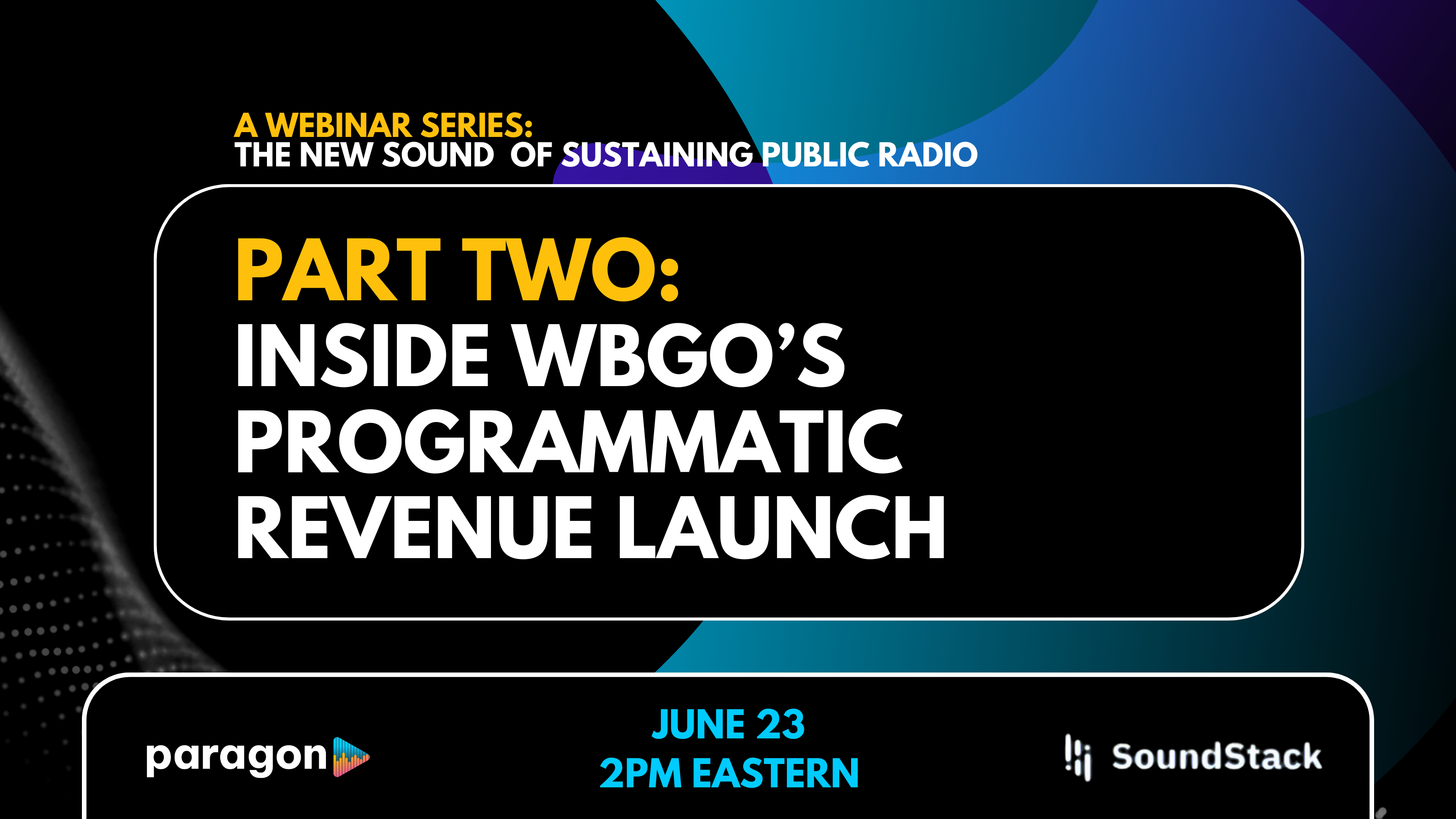
The conversation continues. If you joined us for Part 1 of our webinar series with Paragon Media, “The New Sound of Sustaining Public Radio,” you already know why and how stations are exploring new approaches to generating revenue. Now it's time to hear directly from one that's doing it successfully. |


|